What is the ZZ Framework?+
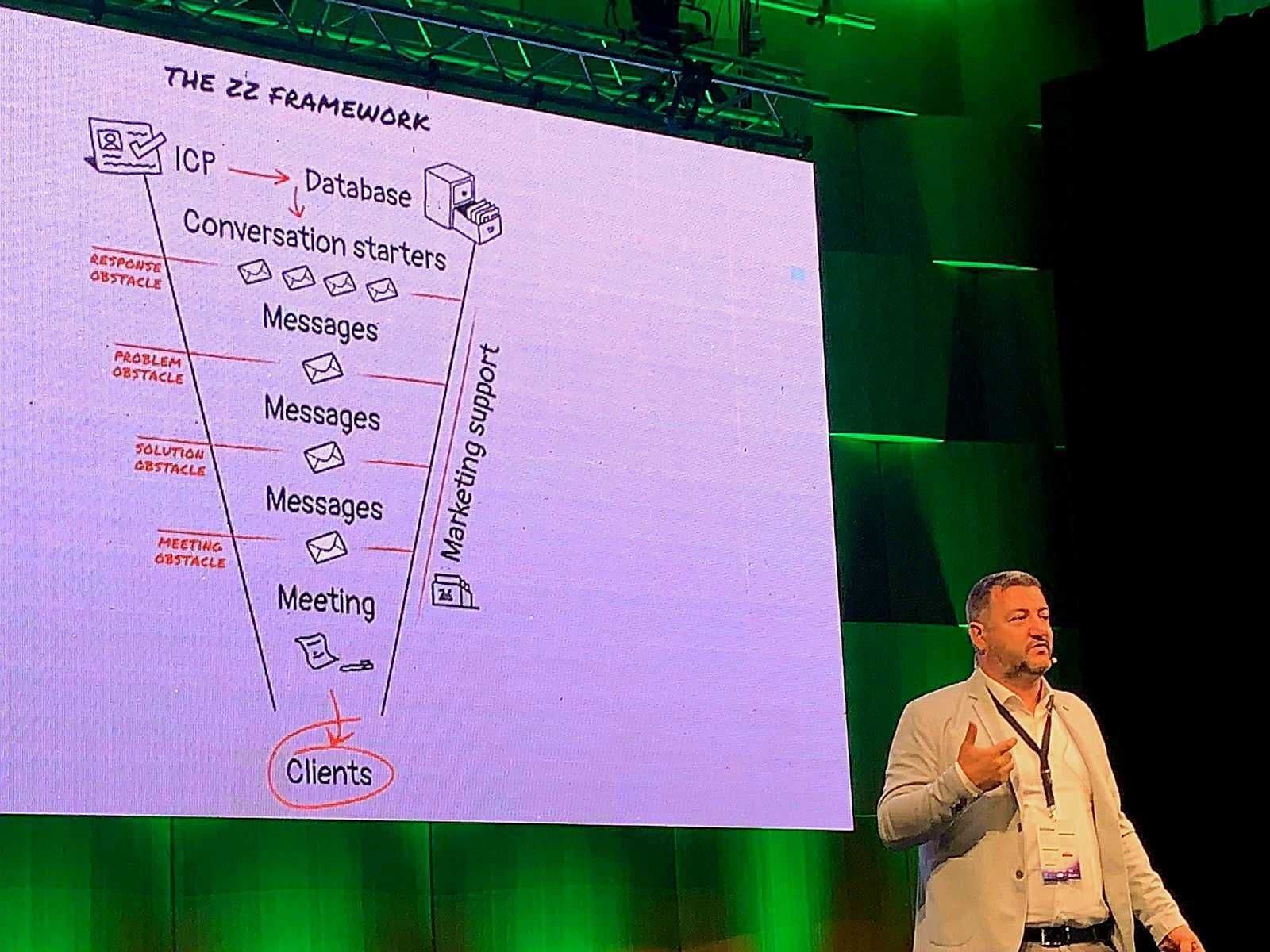
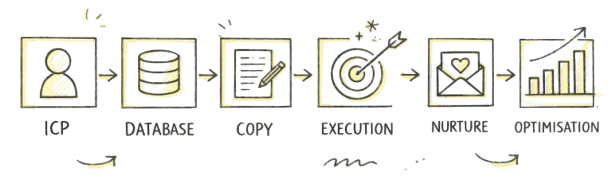
The ZZ Framework is a six-step model for B2B client acquisition created by Dancho Dimkov. The steps are: (1) Ideal Client Profile (ICP), (2) Database Building, (3) Copy — outreach messaging, (4) Campaign Execution, (5) Nurture — lead conversion, and (6) Optimization. It combines outbound sales with marketing assets to create a predictable pipeline for high-ticket service providers.
Who is Sweet Leads for?+
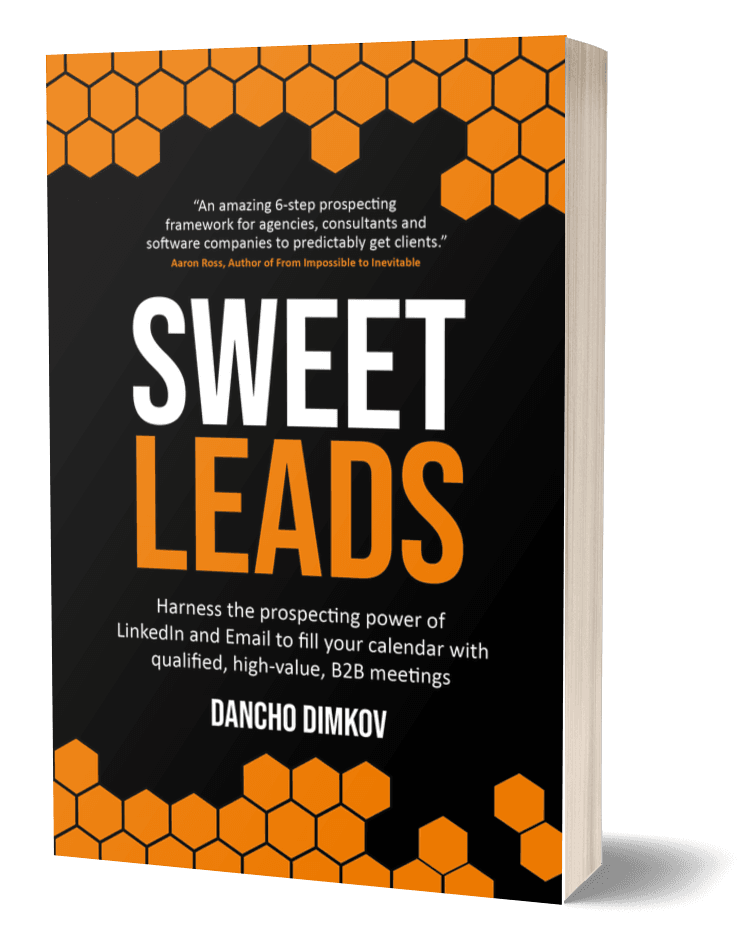
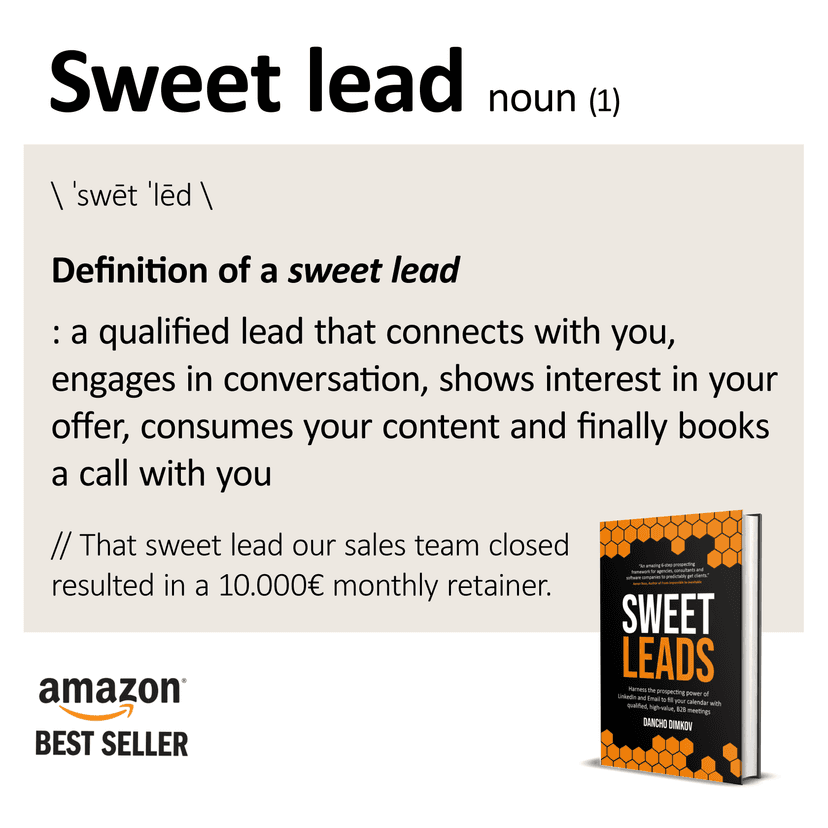
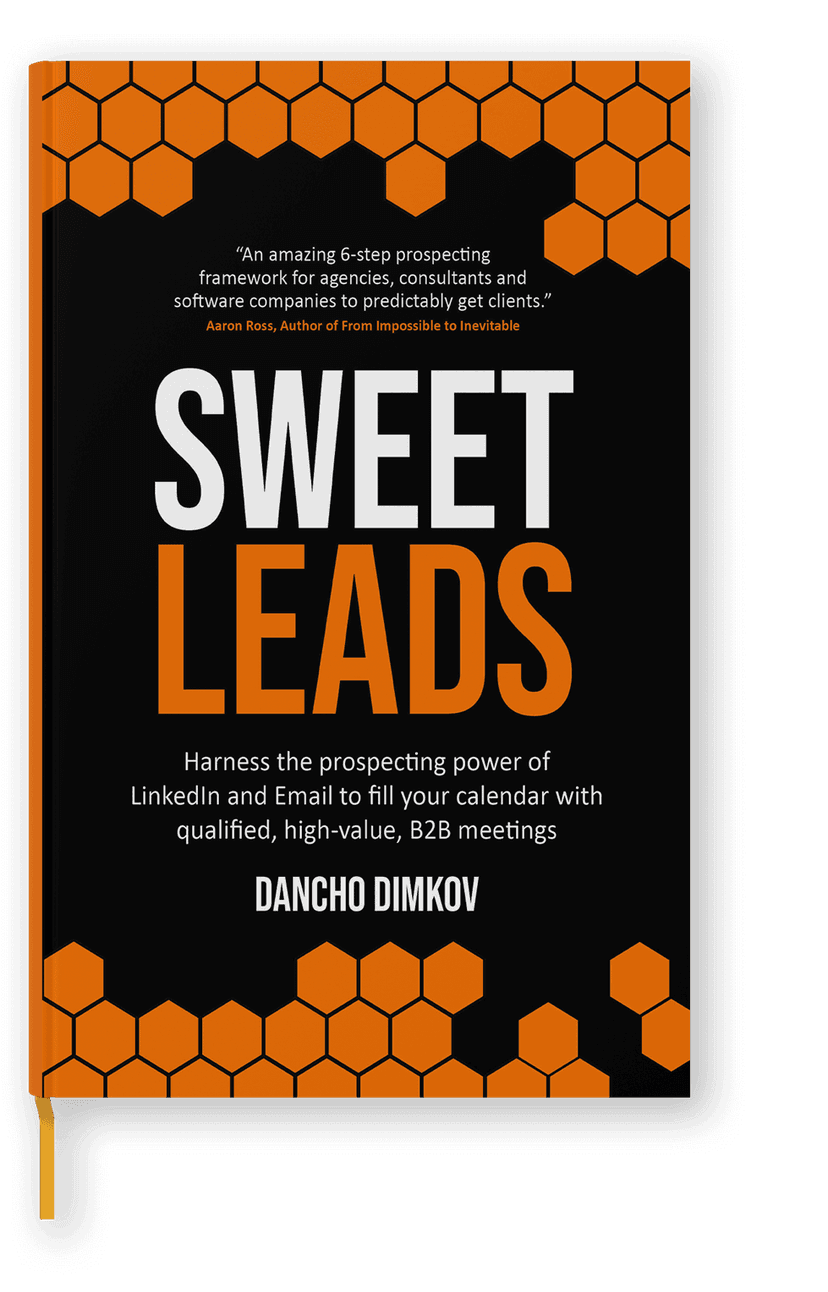
Sweet Leads is written for B2B high-ticket service providers — consultants, agencies, and software companies — primarily SMEs and startups with limited budgets who want a predictable way to acquire clients without relying on ads or referrals.
What results can I expect from the ZZ Framework?+
The book outlines a system designed to fill your calendar with qualified B2B meetings within 12 months, with approximately €50,000 investment and zero ad spend. LinkedIn benchmarks include 30–50% connection acceptance rates from 70–100 weekly invitations per profile.
Is Sweet Leads available as an audiobook?+
Yes. Sweet Leads is available in three formats: hardcopy (€19.95), e-book (€3.45), and audiobook (€9.95).
What is the difference between the book and working with BizzBee Solutions?+
The book gives you the complete ZZ Framework so you can plan and execute B2B outreach campaigns yourself. BizzBee Solutions is the done-for-you service — their team executes the entire outreach process on your behalf using the same framework.
Does the book cover LinkedIn outreach, email outreach, or both?+
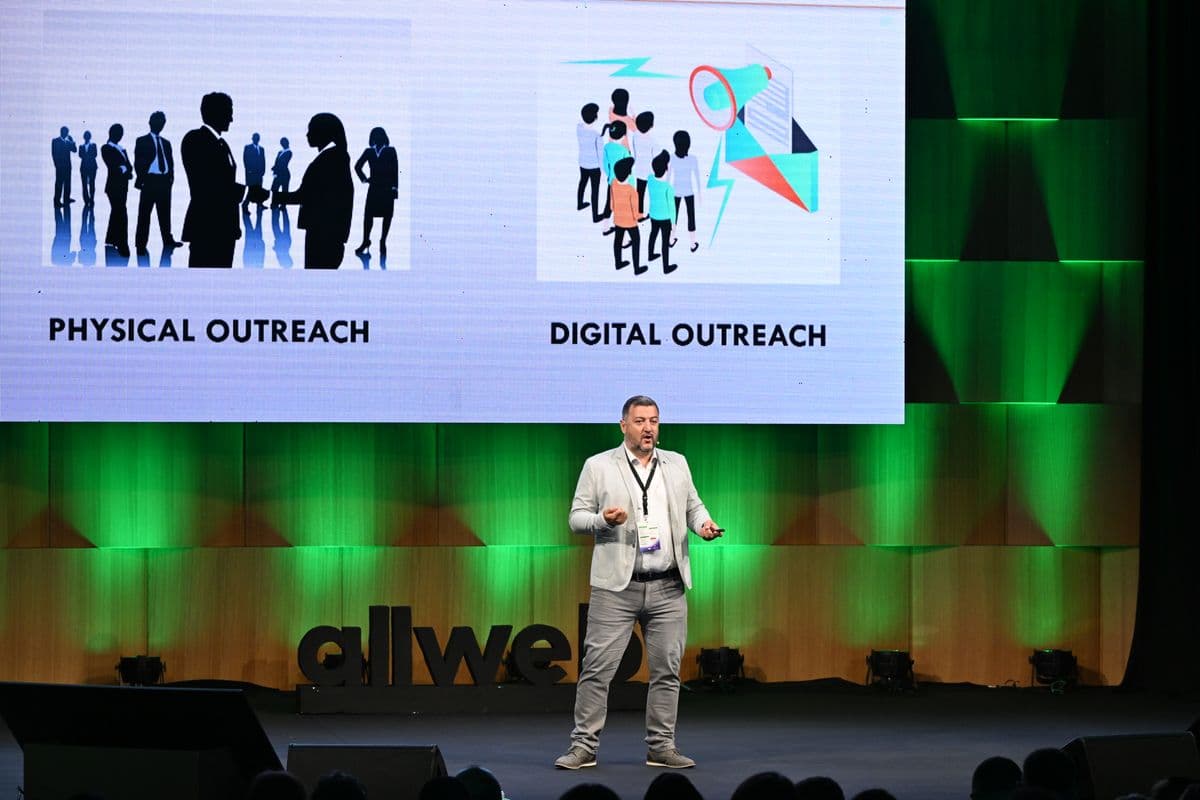
Both. The book covers LinkedIn and email as complementary B2B outreach channels, with specific messaging strategies for each. LinkedIn messages are chatty and conversational; email sequences are more formal and structured. The book explains how to use both channels together for maximum reach.
How do I define my Ideal Client Profile (ICP)?+
The book walks you through a structured process: start with Internal Forces (your business type, benefits vs features, and existing client portfolio analysis), then validate with External Forces (market needs, industry growth, competition analysis), and finally fine-tune using LinkedIn Sales Navigator filters across industry, firmographics, and job positions. You should aim for 3–5 distinct ICP hypotheses to test.
What is the 4-message LinkedIn sequence?+
The book introduces a proven four-message LinkedIn outreach sequence: (1) Duality — present an either/or choice that invites opinion, (2) Empathy — show you understand their specific pain points, (3) Credibility — introduce yourself and share a relevant achievement, (4) Free Value — offer something genuinely useful for free like an e-book, sample, or consultation. This structure achieves 10x higher response rates compared to standard outreach.
Should I pitch in my LinkedIn connection request?+
No. The book is clear on this: the only goal of the connection request is to get accepted. Keep it to 1–2 sentences — something like "Hi [name], your profile is very impressive. I would be glad to connect." Dancho tested this extensively and found that people prefer no message at all over a sales pitch in the connection request.
What is the difference between the campaign goal and the sequence goal?+
This is one of the most important concepts in the book. The campaign goal is to schedule a meeting (long-term). The sequence goal is to get a response and start a conversation (immediate). You should never pitch or ask for a meeting in the automated message sequence. If someone ignored 3–4 messages, a meeting request in the 5th won’t work. The nurture step handles conversion to meetings through one-to-one human conversation.
How does the nurture process work?+
Nurture is where automated outreach switches to manual, one-to-one human conversation. The book outlines five sequential obstacles to overcome: (1) Response — getting them to engage, (2) Problem — getting them to acknowledge a need, (3) Solution — showing your approach works, (4) Meeting — scheduling the call, and (5) Transfer — handing the lead to your sales team. The key technique is the sandwich approach: acknowledge what they said, introduce new information, then end with a question.
How many people should I reach out to per week?+
The book recommends 70–100 LinkedIn invitations per week per profile, consistently. At a 50% acceptance rate, that translates to roughly 2,600 new connections per year per profile. For email, the book advises warming up a new email address first by sending 10–20 manual emails per day for several weeks before launching automated campaigns.
Does the book include real case studies?+
Yes. Sweet Leads includes multiple case studies from BizzBee’s 600+ client projects, including a cybersecurity firm that pivoted from oversaturated FinTech to retail and hospitals, a solar energy investor who used Google Maps to find targets with large rooftops, a Canadian finance trainer who discovered retired people as an untapped segment, and an Irish mindset coach who raised her LinkedIn acceptance rate from 7% to 30% with a single headline tweak.
What tools do I need to execute the ZZ Framework?+
The book covers tool selection for LinkedIn automation, email automation (SMTP/IMAP configuration), email warm-up, database building (scrapers), email verification, and CRM. BizzBee maintains an updated comparison of 40+ tools on their resource page at bizzbeesolutions.com/book-resources. The framework is tool-agnostic — principles work regardless of which specific tools you choose.
Do I need a big budget to get started?+
No. The book is specifically designed for SMEs and startups with limited budgets. The full ZZ Framework can be executed with approximately €50,000 over the first year — compared to €300,000+ typically recommended by traditional marketing approaches. It requires zero ad spend. The investment goes toward tools, database building, and team time.